


WHAT IS THE BODY MASS INDEX (BMI)?
What is BMI?
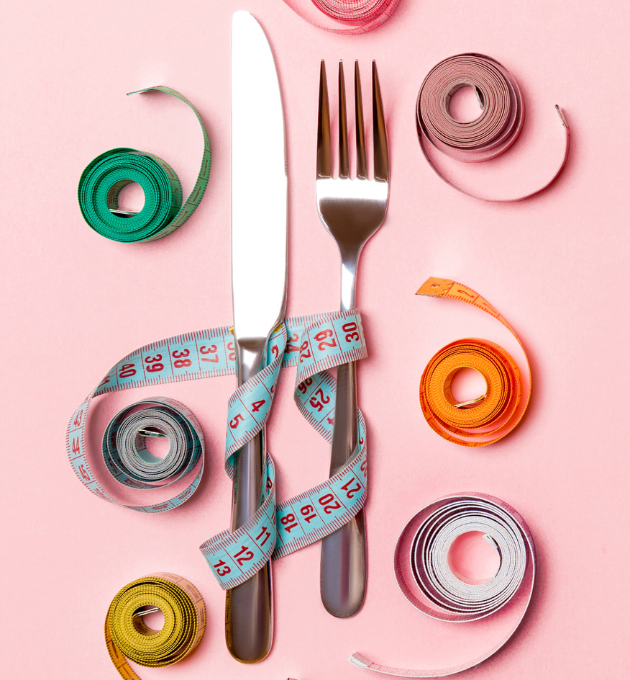
The Body Mass Index (BMI) is a measure that assesses the ratio between your weight and height. It's a useful tool for roughly estimating whether your weight is healthy in relation to your height.
How is BMI calculated? Calculating BMI is relatively simple: Body weight (in kilograms) is divided by the square of height (in meters). The formula is:
BMI = Body weight in kg : Body height in m²

What does the BMI tell us?
The resulting BMI value falls within a range that indicates different weight categories. These categories can be broadly classified as underweight, normal weight, overweight, or obesity (severe overweight).
- BMI below 18.5: Underweight
- BMI 18.5 to 24.9: Normal weight
- BMI 25 to 29.9: Overweight
- BMI 30 or higher: Obesity


-

Collection: 7% tax
3K PROTEIN SHAKE Yoghurt Lime
3K PROTEIN SHAKE Yoghurt Lime
Regular price 13,49€Sale price 13,49€ Regular price37,47€ per kgInhalt : 360 g37,47€ per kg -
Collection: 7% tax
DIET5 7-DAY DIET Your Mix
SaleSale -
Collection: 7% tax
DIET5 14-DAY DIET Your Mix
SaleSale -

Collection: 7% tax
Premium Weight Loss Package
SalePremium Weight Loss Package
Regular price 79,99€Sale price 79,99€ Regular price10,46€ per kg104,93€Inhalt : 7,65 kg10,46€ per kgSale -

Collection: 7% tax
SNACK BUNDLE Deluxe
SaleSNACK BUNDLE Deluxe
Regular price 49,99€Sale price 49,99€ Regular price18,90€ per kg64,39€Inhalt : 2,645 kg18,90€ per kgSale -

Collection: 7% tax
MUSCLE BUILDING BUNDLE DELUXE
SaleMUSCLE BUILDING BUNDLE DELUXE
Regular price 49,99€Sale price 49,99€ Regular price22,02€ per kg61,28€Inhalt : 2,27 kg22,02€ per kgSale -

Collection: 7% tax
Weight Loss Package Deluxe
SaleWeight Loss Package Deluxe
Regular price 48,99€Sale price 48,99€ Regular price20,62€ per kg61,89€Inhalt : 2,376 kg20,62€ per kgSale -

Collection: 7% tax
SNACK TASTER PACK
SaleSNACK TASTER PACK
Regular price 29,99€Sale price 29,99€ Regular price13,79€ per kg36,79€Inhalt : 2,175 kg13,79€ per kgSale -

Collection: 7% tax
MUSCLE BUILDING TRIAL PACKAGE
SaleMUSCLE BUILDING TRIAL PACKAGE
Regular price 29,99€Sale price 29,99€ Regular price26,90€ per kg36,74€Inhalt : 1,115 kg26,90€ per kgSale -

Collection: 7% tax
WEIGHT LOSS PACKAGE Classic
SaleWEIGHT LOSS PACKAGE Classic
Regular price 24,99€Sale price 24,99€ Regular price21,04€ per kg26,97€Inhalt : 1,188 kg21,04€ per kgSale -

Collection: 7% tax
Power meets endurance
SalePower meets endurance
Regular price 23,99€Sale price 23,99€ Regular price25,94€ per kg28,32€Inhalt : 925 g25,94€ per kgSale -

Collection: 7% tax
Power & Energy Bundle
SalePower & Energy Bundle
Regular price 35,95€Sale price 35,95€ Regular price27,03€ per kg36,94€Inhalt : 1,33 kg27,03€ per kgSale -

Collection: 7% tax
Hydrate & Perform Powder + Tabs Bundle
SaleHydrate & Perform Powder + Tabs Bundle
Regular price 25,95€Sale price 25,95€ Regular price24,95€ per kg30,95€Inhalt : 1,04 kg24,95€ per kgSale -

Collection: 7% tax
SLIM SHAKE READY-TO-USE Maxi-Mix
SaleSLIM SHAKE READY-TO-USE Maxi-Mix
Regular price 27,99€Sale price 27,99€ Regular price7,07€ per l32,28€Inhalt : 3,96 l7,07€ per lSale -

Collection: 7% tax
CLEAR WHEY Your Mix
CLEAR WHEY Your Mix
Regular price 83,97€Sale price 83,97€ Regular price66,64€ per kgInhalt : 1,26 kg66,64€ per kg -

Collection: 7% tax
3K PROTEIN SHAKE Maxi Mix
Sale3K PROTEIN SHAKE Maxi Mix
Regular price 77,00€Sale price 77,00€ Regular price35,65€ per kg88,89€Inhalt : 2,16 kg35,65€ per kgSale -

Collection: 7% tax
ISOSTAR HYDRATE & PERFORM Your Mix
ISOSTAR HYDRATE & PERFORM Your Mix
Regular price 53,94€Sale price 53,94€ Regular price22,48€ per kgInhalt : 2,4 kg22,48€ per kg -

Collection: 7% tax
3K PROTEIN MUESLI Your Mix
3K PROTEIN MUESLI Your Mix
Regular price 29,97€Sale price 29,97€ Regular price25,62€ per kgInhalt : 1,17 kg25,62€ per kg -

Collection: 7% tax
HIGH PROTEIN CRUNCHY MUESLI Your Mix
HIGH PROTEIN CRUNCHY MUESLI Your Mix
Regular price 29,94€Sale price 29,94€ Regular price13,31€ per kgInhalt : 2,25 kg13,31€ per kg -

Collection: 7% tax
3K PROTEIN SHAKE Your Mix
3K PROTEIN SHAKE Your Mix
Regular price 40,47€Sale price 40,47€ Regular price37,47€ per kgInhalt : 1,08 kg37,47€ per kg -

Collection: 7% tax
ISOSTAR HYDRATE & PERFORM Mix
SaleISOSTAR HYDRATE & PERFORM Mix
Regular price 35,95€Sale price 35,95€ Regular price22,47€ per kg38,95€Inhalt : 1,6 kg22,47€ per kgSale -

Collection: 7% tax
ISOSTAR Welcome Bundle
SaleISOSTAR Welcome Bundle
Regular price 8,99€Sale price 8,99€ Regular price20,43€ per kg10,28€Inhalt : 440 g20,43€ per kgSale -
Collection: 7% tax
DIET5 21-DAY DIET Your Mix
SaleDIET5 21-DAY DIET Your Mix
Regular price 275,00€Sale price 275,00€ Regular price56,12€ per kg321,90€Inhalt : 4,9 kg56,12€ per kgSale -

Collection: 7% tax
DIET5 DAILY RATION Your Mix
-

Collection: 7% tax
DIET5 BOWL 5 Daily ration Choco Banana
DIET5 BOWL 5 Daily ration Choco Banana
Regular price 14,95€Sale price 14,95€ Regular price5,98€ per 100gInhalt : 250 g5,98€ per 100g


How do I interpret my BMI?
Based on your BMI, you can now calculate your basal metabolic rate and activity level. Your basal metabolic rate indicates how much energy your body uses at complete rest – even if you spend the entire day on the couch. The additional energy required for physical activity is called your activity level. Have you already determined these values? Then you can now create your personalized training and nutrition program.
For optimal training results, protein shakes, such as whey protein shakes, are an excellent supplement after strength training. They not only promote muscle growth but also support fat burning.
The BMI is a helpful initial assessment of physical condition and supports the creation of training and nutrition plans; however, it also has its limitations and, for example, does not take into account the distribution of fat and muscle mass. People with a lot of muscle mass can have a higher BMI without being overweight.
For a more accurate assessment, you should consider additional factors such as muscle mass, fat distribution, body surface area, and general fitness.
FROM THE LAYENBERG COMMUNITY
-

Satt trotz Kaloriendefizit – so bleibst du lang...
Abnehmen bedeutet nicht automatisch Verzicht, Hunger und ständiges Grübeln über Essen. Mit der richtigen Strategie kannst du satt bleiben und trotzdem Gewicht verlieren
Satt trotz Kaloriendefizit – so bleibst du lang...
Abnehmen bedeutet nicht automatisch Verzicht, Hunger und ständiges Grübeln über Essen. Mit der richtigen Strategie kannst du satt bleiben und trotzdem Gewicht verlieren
-

Protein Timing: Wie du deinen Proteinbedarf opt...
Protein ist nicht nur für Sportler wichtig. Entscheidend ist nicht nur, wie viel Eiweiß du zu dir nimmst, sondern auch, wie gut du es über den Tag verteilst.
Protein Timing: Wie du deinen Proteinbedarf opt...
Protein ist nicht nur für Sportler wichtig. Entscheidend ist nicht nur, wie viel Eiweiß du zu dir nimmst, sondern auch, wie gut du es über den Tag verteilst.
-

Protein zum Abnehmen – wie viel brauchst du wir...
Protein gilt als einer der wichtigsten Nährstoffe beim Abnehmen. Doch wie viel brauchst du wirklich – und ist mehr automatisch besser?
Protein zum Abnehmen – wie viel brauchst du wir...
Protein gilt als einer der wichtigsten Nährstoffe beim Abnehmen. Doch wie viel brauchst du wirklich – und ist mehr automatisch besser?


